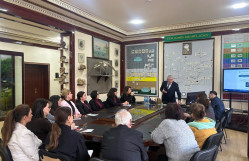
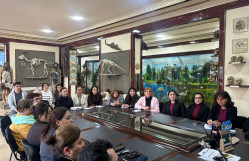
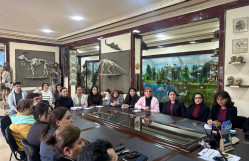
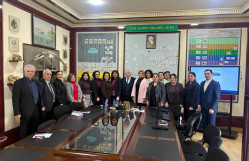
Within the framework of events dedicated to 27 March – “Science Day” in the Republic of Azerbaijan, organized by the Faculty of Biology, a roundtable discussion was held on the topic “Application Prospects of Peptide-Based Antibiotics.”
The event was moderated by Professor Saib Gгlaлhmadov of the Department of Molecular Biology and Biotechnologies. The roundtable was attended by the faculty administration, academic staff, doctoral candidates, and master’s students, as well as Ali Guliyev, Director of the Biotechnology Center of Nakhchivan State University. The guest speaker delivered an extensive presentation substantiating the contemporary scientific and practical relevance of the topic, and the discussions were met with great interest by the participants.
During the discussions, it was noted that peptide-based antibiotics are considered promising substances due to their high selectivity against microorganisms and strong antimicrobial activity. It was emphasized that these compounds primarily act by damaging bacterial cell membranes or by targeting intracellular mechanisms. This contributes to reducing the likelihood of developing antibiotic resistance and enhances their importance as alternative therapeutic agents.
At the same time, it was highlighted that the rapid increase in antibiotic resistance in modern times has further strengthened scientific interest in peptide-based preparations. In addition to medicine, peptide antibiotics have broad application prospects in veterinary medicine and the food industry. However, certain limitations such as stability issues, potential toxicity, and high production costs were also addressed. Future research directions were specifically identified as structural modification of peptides, enhancement of stability, and the development of next-generation delivery systems, which could expand their applications in clinical practice.
Within the framework of the event, the importance of strengthening scientific research activities in this field within the educational process and involving master’s students more actively in research projects as young investigators was emphasized.
The roundtable concluded in an atmosphere of broad scientific discussion and exchange of ideas.