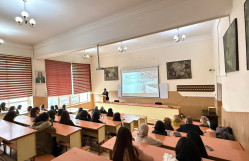
On February 23, 2026, a scientific seminar dedicated to “Science Day” was held at the Faculty of Biology of Baku State University (BSU). During the seminar, Zaur Salman oglu Salmanli, a part-time lecturer of the Department of Zoology and Physiology, delivered a presentation entitled “Aquaculture Opportunities for Sturgeons in Azerbaijan.”
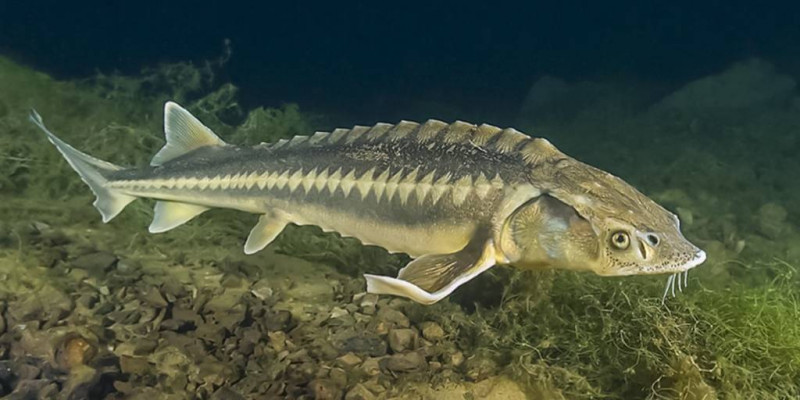
In his presentation, it was noted that the farming of sturgeon species in Azerbaijan is rooted in long-standing historical traditions and, at the present stage, represents a strategically important economic sector. It was emphasized that species belonging to the family Acipenseridae—widely distributed in the Caspian basin and possessing high market value—such as Huso huso, Acipenser gueldenstaedtii, Acipenser stellatus, and Acipenser persicus, play a significant role in the production of black caviar.
The seminar analyzed the possibilities of cultivating sturgeons in cages, ponds, and reservoir-type farms, taking into account their biological characteristics — longevity, late sexual maturity, high fecundity, and specific ecological requirements. In the context of limited freshwater resources across the country, the relevance of intensive and water-saving technologies, particularly recirculating aquaculture systems (RAS), was highlighted.
It was stated that the cultivation of sturgeons under aquaculture conditions creates substantial export potential, contributes to the diversification of the agricultural sector and increased employment in the regions, supports the conservation of natural populations, and strengthens the raw material base of the food industry.
Seminar participants exchanged views on the topic and discussed the prospects for developing a sustainable and export-oriented aquaculture sector in Azerbaijan. It was noted that the application of modern technologies makes it possible both to increase productivity and to reduce environmental risks.