A scientific seminar on the topic “Application possibilities of modern molecular-genetic methods in research and clinical practice” was hel

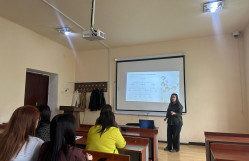
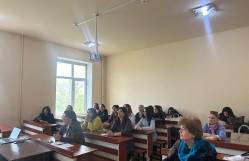
A scientific seminar on the topic “Application possibilities of modern molecular-genetic methods in research and clinical practice” was held at the Faculty of Biology. The event was attended by the faculty administration, academic staff, and students.
At the seminar, part-time lecturer of the Department of Genetics at Baku State University’s Faculty of Biology, Khayala Hasanova, delivered a presentation. During her report, detailed information was provided on the broad application possibilities of molecular-genetic methods in modern biology and medicine, as well as in clinical practice.
The speaker noted that molecular-genetic approaches enable the study of changes occurring at the DNA, RNA, and protein levels. This is of great importance for a deeper understanding of the molecular mechanisms of various diseases. The presentation particularly emphasized the role of methods such as polymerase chain reaction (PCR), next-generation sequencing (NGS), microarray technologies, electrophoresis, and Southern blotting in gene expression analysis, detection of genetic variants, and investigation of gene functions.
It was highlighted during the seminar that these methods make a significant contribution to the expansion of fundamental scientific knowledge in the fields of genetics, oncology, microbiology, and pharmacogenomics. At the same time, attention was drawn to the importance of molecular-genetic methods in clinical practice for early diagnosis, disease prognosis, and the development of personalized treatment strategies.
The report noted that the identification of specific gene mutations in the diagnosis of hereditary diseases and cancer increases opportunities for early intervention. It was also emphasized that pharmacogenetic analyses enable the selection of appropriate medications for patients, thereby improving treatment effectiveness and reducing side effects. Additionally, the importance of molecular-genetic methods in providing rapid and highly accurate results in the diagnosis of infectious diseases was underlined.
At the end of the seminar, it was stated that molecular-genetic methods serve as an important bridge between scientific research and clinical applications, and represent one of the key directions in the development of modern medicine. It was also noted that this field will continue to advance further with the application of innovative technologies in the future.